

Find and hire a top-tier
Chameleon Collective embeds fractional CMOs and senior marketing specialists directly into your team — delivering brand strategy, growth marketing, and revenue transformation without agency overhead or long-term commitments.
Our marketing consultants are seasoned executives like Alejandro Mendoza, Erin Flaxman, and Tamara Connolly—leaders who've built brands at scale and driven eight-figure revenue growth. You get strategic direction and hands-on execution from people who've sat in your seat, not an agency team learning on your dime.
We don't silo brand positioning from demand generation or disconnect marketing from sales. Our practice spans brand strategy, performance marketing, customer experience, and revenue operations—ensuring your marketing services investment drives measurable business outcomes, not just awareness metrics.
Whether you're between CMOs, scaling rapidly, or navigating a transformation, our fractional marketing officers embed directly into your team with full accountability. We lead strategic initiatives for 6-12 months, build sustainable systems, then recruit your permanent leader—leaving you stronger than we found you.
From building Blink Fitness's in-house creative agency that slashed production costs by 40% to shaping global conversations around AI at TEDAI, we deliver documented results. Our marketing services are measured by pipeline velocity, revenue attribution, customer acquisition costs, and brand equity—not deliverables in a deck.
Marketing services have evolved beyond the traditional agency model of buying campaigns and creative deliverables. Today's sophisticated organizations require strategic leadership that integrates brand positioning, growth marketing, revenue operations, and customer experience into a cohesive system. Yet most marketing services providers still operate in silos—brand agencies disconnected from demand generation, performance marketers oblivious to positioning strategy, and consultants who recommend without implementing.
The modern marketing services landscape demands a different approach: embedded leadership with execution accountability. This is where fractional CMO services and specialized marketing strategy consulting intersect with actual delivery. Rather than outsourcing to a traditional digital marketing agency that maintains distance from your business outcomes, organizations increasingly need senior marketing leaders who integrate directly into teams, own results, and build sustainable capability.
We've spent decades in these CMO and VP Marketing seats at leading brands. Our collective brings together former executives from companies that have navigated every stage of growth—from pre-revenue startups to multi-billion dollar transformations. What we've learned is that marketing services must deliver three things simultaneously: strategic clarity, tactical execution, and organizational capability building.
The fractional chief marketing officer model addresses a critical gap in how companies access marketing leadership. Traditional options present a false choice: hire a full-time CMO with $300K+ compensation before you're ready, or piece together agency relationships that lack strategic coherence.
Fractional CMO services provide a third path. A seasoned marketing executive embeds into your organization for 15-25 hours per week, typically for 6-12 months. They own marketing strategy, build the function, hire the team, establish systems, and drive measurable outcomes. Unlike consulting engagements that end with a PowerPoint deck, fractional leaders implement their recommendations and remain accountable for results.
Consider the economics: a full-time CMO carries $400K+ in total compensation, benefits, equity, and overhead. A fractional engagement delivers the same strategic caliber for $150-200K annually, with the flexibility to scale up or down based on business needs. More importantly, you access executives who have already built marketing functions multiple times—they know what works and what doesn't at your stage.
Tamara Connolly, who led marketing transformation at multiple high-growth B2B companies, embeds this way with clients navigating their first serious marketing buildout. Her approach centers on three sequential phases: diagnostic assessment of current capabilities, strategic roadmap development with clear KPIs, and hands-on implementation of the foundation. By month six, she's typically hiring her replacement—a permanent VP Marketing who inherits a functioning system rather than starting from scratch.
Fractional CMO services work best in specific scenarios. Growth-stage companies that have achieved product-market fit but lack marketing sophistication benefit enormously. So do established businesses undergoing transformation—new market entry, business model shift, digital transformation, or post-acquisition integration.
The model also serves organizations between permanent leaders. When a CMO departs, an interim marketing leader maintains momentum, protects institutional knowledge, and can even lead the search for their successor. This continuity proves far more effective than leaving a void or promoting someone unready for the role.
What doesn't work: expecting fractional leadership to execute tactical campaigns. A fractional CMO architects the strategy, builds the machine, and directs the team—but they're not your email marketing coordinator or social media manager. The model requires supporting cast members who handle execution.
Growth marketing has become diluted terminology. Every digital marketing agency now claims to offer "growth marketing," yet most deliver demand generation tactics disconnected from actual business growth. Real growth marketing consulting integrates brand positioning, customer acquisition economics, lifecycle optimization, and revenue operations into a unified system.
Mark Newcomer brings this integrated lens from his years scaling revenue at high-growth companies. His framework starts with brutal honesty about unit economics: what does customer acquisition actually cost across channels, what's the true lifetime value after churn, and where do the growth levers with positive ROI actually exist? Most companies lack this foundational clarity, instead chasing channel tactics because competitors use them.
The growth marketing methodology we practice follows a deliberate sequence. First, audit the full funnel from awareness through renewal to identify where the system breaks. Most companies assume their problem is top-of-funnel awareness, when the real issue is mid-funnel conversion or activation. Second, model the economics to understand which improvements actually matter. A 10% increase in demo-show rate might be worth 100x more than a 50% increase in blog traffic. Third, prioritize experiments based on potential impact and implementation complexity. Finally, build the measurement infrastructure to prove what's working.
Growth marketing agency services for B2B face unique challenges. Unlike B2C, where digital acquisition channels offer relatively direct attribution, B2B buying committees involve 6-10 stakeholders across 3-6 month sales cycles. Attribution becomes murky, brand awareness matters enormously, and relationship-building remains essential.
Erin Flaxman specializes in this B2B complexity. Her approach recognizes that B2B growth marketing is actually three parallel systems: demand generation that creates pipeline, brand positioning that shortens sales cycles by establishing category authority, and customer marketing that drives expansion revenue. Most companies optimize one system while neglecting the others.
Her client work focuses on integration. When demand generation runs LinkedIn campaigns, are they reinforcing brand positioning or undermining it with generic messaging? When sales has conversations, are they equipped with content that reflects how marketing framed the problem? When customers successfully onboard, does marketing capture that insight to refine ICP targeting? This connective tissue separates effective growth marketing consulting from channel optimization.
Brand strategy services remain chronically undervalued, especially in performance-driven environments. Leadership teams see brand as subjective and fluffy compared to measurable demand generation. This misses the fundamental insight: brand strategy determines whether your growth marketing works at all.
Consider two companies spending $50K monthly on Google Ads. Company A has unclear positioning, generic messaging, and no differentiation. Company B has sharp positioning, messaging that resonates with specific pain points, and clear differentiation. Both generate similar click volume, but Company B converts at 3x the rate because prospects immediately understand relevance. Brand strategy created that gap.
Alex Hultgren led brand transformations at companies most people recognize. His framework for brand strategy services starts with strategic positioning—not visual identity. Who specifically are you for, what job are you helping them accomplish, why you instead of alternatives, and what do you want people to believe about you? Until those questions have clear, differentiated answers, any creative execution will struggle.
The TEDAI case study demonstrates this approach. The AI conversation landscape in 2024 was crowded, technical, and dominated by fear-based narratives. TED needed to carve out distinct positioning for their AI-focused conference. Rather than competing in the oversaturated "AI ethics" space, we positioned TEDAI around "shaping conversations"—reframing AI as a tool for human creativity and connection rather than replacement. This strategic positioning then cascaded into messaging, experience design, and content strategy that felt distinctly TED while addressing AI specifically.
The artificial separation between brand and performance marketing creates dysfunction. Brand teams focus on awareness and perception, performance teams focus on conversions and CAC, and the two rarely coordinate. This organizational split misses the reality: brand strategy amplifies performance marketing efficiency, while performance data reveals whether brand positioning actually resonates.
Julie Neumark bridges this divide through integrated marketing frameworks. When clients engage her for brand strategy services, she begins by auditing performance data. Which messages drive clicks? Which landing pages convert? Where do prospects disengage? This quantitative foundation ensures brand strategy connects to business outcomes rather than aesthetic preferences.
The Blink Fitness transformation illustrates this integration. The fitness category faces commoditization pressure—every gym offers equipment, classes, and trainers. Blink needed brand differentiation that would drive membership growth specifically in underserved urban communities. We developed positioning around "mood-boosting fitness" rather than body transformation, resonating with the psychological benefits their target audience sought. This wasn't just tagline work—it informed location strategy, product development, pricing, and marketing channel selection.
Critically, we built an in-house creative agency to execute this brand vision consistently. Rather than the fragmented experience of managing multiple external vendors, Blink gained an integrated team that understood the brand deeply and could move quickly. The in-house agency delivered $2M in annual savings while dramatically improving creative quality and speed-to-market. This execution model proves that brand strategy services must extend beyond strategy documents into implementation systems.
Marketing strategy consulting suffers from a delivery problem. Most consultants diagnose well, recommend comprehensively, then leave. Implementation falls to internal teams who lack context, capacity, or capability. Within six months, the beautiful strategy deck gathers dust while the organization returns to prior patterns.
Our approach embeds strategy and execution. When Alejandro Mendoza engages with a client on marketing strategy, he's not starting with a blank slate theory. He's bringing frameworks proven across dozens of companies, adapting them to specific context, then rolling up sleeves to implement. This might mean building the marketing team structure, selecting and implementing the MarTech stack, creating the content engine, or establishing the measurement framework.
The diagnostic phase typically reveals that organizations lack three foundational elements. First, clear customer segmentation with quantified sizing and prioritization. Most companies claim to target everyone or use demographics rather than needs-based segments. Second, messaging architecture that maps to buyer journey stages and competitive alternatives. Generic "we're innovative and customer-focused" messaging dominates. Third, integrated channel strategy with realistic ROI expectations. Companies spread budget across eight channels without sufficient investment in any.
Marketing services for startups particularly struggle with strategy implementation. Founding teams understand their product deeply but lack marketing sophistication. They hire their first marketer—typically a mid-level generalist—then expect that person to build entire marketing function. The generalist, skilled at tactics but not architecture, implements disconnected activities. Content creation without strategy. Social media without audience insight. Paid acquisition without economic modeling.
Asa Coleman works extensively with startups navigating this transition. His marketing strategy consulting begins by establishing what stage-appropriate marketing actually means. Pre-product-market-fit companies shouldn't build content engines or scale paid acquisition—they should obsess over customer insight and positioning validation. Post-PMF companies need operational marketing systems—lead scoring, nurture flows, sales enablement, analytics infrastructure. Growth-stage companies require specialized functions—separate teams for acquisition, lifecycle, product marketing, brand, and analytics.
The strategy implementation model follows a 90-day sprint structure. Month one: strategic foundation (positioning, segmentation, channel strategy, measurement framework). Month two: operational buildout (team structure, tool selection, process design, content frameworks). Month three: execution launch (campaigns live, measurement dashboards active, optimization cycles running). By day 90, marketing has transitioned from ad hoc activities to systematic operations with clear owners, metrics, and feedback loops.
The most sophisticated marketing challenge isn't mastering individual disciplines—it's integrating them. Brand positioning must inform demand generation messaging. Customer experience insights must shape product marketing. Sales conversations must feed back into positioning refinement. Revenue operations must connect marketing metrics to business outcomes.
Traditional agency models struggle with this integration because they're structured around specialization. The brand agency doesn't talk to the performance agency. The content shop doesn't coordinate with the sales enablement consultant. The organization becomes the integration layer, a role they're poorly equipped to perform.
Brian Parrish brings integration expertise from building marketing operations at scale. His framework maps the five core marketing functions—brand, demand generation, product marketing, customer marketing, and marketing operations—then defines the handoffs between them. Where does brand strategy output get translated into demand generation campaigns? How do product marketing insights inform customer segmentation? When does marketing operations data trigger positioning refinement?
These integration points require both process design and cultural alignment. Process ensures information flows through defined channels at regular cadences. Culture ensures teams view themselves as interconnected rather than independent. The weekly marketing leadership meeting isn't status reporting—it's active integration where brand decisions inform performance priorities, performance learnings reshape messaging, and customer insights trigger positioning evolution.
Evaluating marketing services providers requires looking beyond credentials and case studies to delivery model and accountability structure. Three questions reveal whether a provider can actually drive transformation:
First, who specifically will lead your engagement? Many agencies sell senior expertise then staff junior teams. We lead with the executives who will actually do the work—Tamara, Mark, Erin, Alex, Alejandro, Julie, Asa, Brian—former CMOs and VPs who have built marketing functions multiple times.
Second, what does accountability look like? Are they accountable for recommendations or outcomes? We structure engagements around measurable business results—pipeline growth, customer acquisition costs, revenue attribution, brand awareness lift—with our compensation tied to delivery.
Third, how do they build internal capability? Will your team be more capable after the engagement, or dependent on external support? Our model emphasizes knowledge transfer, hiring the right permanent team members, and establishing systems that sustain after we transition out.
Marketing services have evolved from campaign execution to strategic transformation. Organizations that recognize this shift—and partner with senior practitioners who embed directly into their teams—gain sustainable competitive advantage. Those that continue treating marketing as a vendor-managed activity rather than a core capability will continue seeing mediocre results from fragmented efforts.
The future of marketing services is fractional leadership, integrated execution, and outcome accountability. It's former CMOs and VPs who implement their recommendations rather than handing off decks. It's strategic clarity that drives tactical efficiency. It's building your marketing capability, not outsourcing it indefinitely.
Our fractional marketing leaders and execution specialists embed directly into your team to drive measurable growth. From brand strategy to revenue operations, we deliver the expertise you need without the overhead of full-time hires.
Former VPs and CMOs from leading brands step in as interim marketing leaders for 6-12 months. We own strategy, build teams, and deliver results—not decks. Alejandro Mendoza and Tamara Connolly bring decades of brand-building and growth experience to transform marketing organizations from the inside.
Performance-driven marketing that connects directly to revenue. Our growth marketing consultants optimize your full funnel—from acquisition strategy to conversion optimization to customer retention. We focus on metrics that matter: pipeline, CAC, LTV, and conversion rates across every channel.
Strategic brand work that creates competitive separation and drives business value. We develop positioning frameworks, brand architecture, messaging hierarchies, and go-to-market strategies that align internal teams and resonate with your highest-value audiences. Our work on TEDAI shaped global conversations around AI's future.
Integrated digital strategies that span paid media, content marketing, SEO, social, and email. Mark Newcomer and our digital strategists design channel ecosystems optimized for your customer journey—not siloed tactics. We connect marketing technology, creative execution, and performance analytics into cohesive growth engines.
The operational backbone that transforms marketing from cost center to revenue driver. We architect MarTech stacks, implement CRM and marketing automation platforms, design attribution models, and build reporting dashboards that connect marketing activity to business outcomes. Technology, process, and team alignment working in concert.
We've built fully functioning in-house creative agencies from scratch—like our work with Blink Fitness, where we stood up a complete creative operation that reduced production costs by 40% while accelerating campaign velocity. Julie Neumark leads our creative transformation practice with proven frameworks for agency design and talent structuring.
Our Process
Lead
Fractional Marketing Leadership
We embed a fractional CMO or VP of Marketing directly into your team — not as an advisor, but as your acting marketing executive. Leaders like Alejandro Mendoza and Erin Flaxman bring 15-20 years of brand and growth experience from companies like PepsiCo, Mastercard, and venture-backed startups. They own strategy, build your marketing function, establish operating cadence, and deliver measurable pipeline impact. Typical engagements run 6-12 months, bridging critical growth phases or transformation periods until you're ready for a permanent hire.
Deliver
Expert Execution Teams
We deploy specialized marketing practitioners to execute specific initiatives alongside your team. This might be Mark Newcomer architecting your demand generation engine, Tamara Connolly building your content strategy and editorial calendar, or Alex Hultgren designing your brand positioning framework. Unlike agencies that abstract work through account managers, our consultants work as embedded team members with direct accountability for outcomes — whether that's launching a rebrand, standing up marketing automation, or scaling paid acquisition channels.
Deliver
Integrated Marketing Transformation
We orchestrate cross-functional marketing buildouts that span brand, growth, and revenue operations. This is where CC's model differentiates: we don't just deliver creative or run ads in isolation. Julie Neumark might lead your marketing operations overhaul while Brian Parrish rebuilds your sales enablement infrastructure and Asa Coleman develops your customer experience strategy — all working in concert. The Blink Fitness case exemplifies this: we built their entire in-house creative agency, integrating brand production with membership growth objectives to deliver 35% cost reduction and 50% faster creative turnaround.
Recruit
Permanent Marketing Talent Placement
When your fractional engagement reaches its natural endpoint, we transition to permanent leadership recruitment. We don't hand off to a separate recruiting firm — we leverage our 200+ member network to identify and place the right full-time CMO, VP of Growth, or marketing director. Because we've been embedded in your business, we understand your culture, growth stage, and strategic needs intimately. We're not filling a job description; we're architecting your marketing leadership for the next phase of scale.
Ready to transform your marketing function? Let's talk.
Chat with a marketing expert| Feature | Chameleon Collective | Traditional Marketing Agency | Full-Time Marketing Hire | Independent Consultant |
|---|---|---|---|---|
| Leadership Level | Former C-suite & VP executives from Fortune 500 brands | Account managers, junior strategists | Single hire, limited perspective | Variable, often mid-level |
| Engagement Speed | Deploy fractional CMO within 2 weeks | 4-8 weeks for onboarding and team assembly | 3-6 months recruiting, onboarding, ramp time | 1-2 weeks, but limited capacity |
| Strategic + Execution | Integrated: strategy, implementation, and team enablement | Strategy heavy, execution outsourced or delayed | Execution focus, may lack strategic breadth | Typically strategy-only, no execution |
| Cost Structure | Fractional model: pay only for what you need (6-12 months typical) | Retainer + project fees, often 12-month minimum commitments | $200K-$400K annual salary + benefits + recruiting costs | Hourly/project rates, but limited scope coverage |
| Cross-Functional Expertise | 200+ experts across brand, growth, commerce, sales, tech | Siloed by service line (digital, creative, media) | Depth in one area, limited cross-functional capability | Narrow specialization, single domain |
| Accountability Model | Direct embedding with your team, shared KPIs and outcomes | Agency-client divide, deliverable-focused | Employee accountability, but lacks external perspective | Project-based, limited ongoing responsibility |
| Knowledge Transfer | Built-in: train internal teams, leave playbooks, recruit permanent replacement | Minimal: protect proprietary methods, retain dependency | Knowledge stays with hire (risk if they leave) | Variable: depends on engagement structure |
| Scalability | Scale up/down specialists as needs evolve without disruption | Rigid team structures, upselling for additional resources | Fixed capacity, requires additional hiring to scale | Limited: one person's bandwidth |
| Transformation Focus | Built for change: interim leadership, system-building, org design | Campaign and project-oriented, not org transformation | Internal culture fit, but may resist necessary disruption | Advisory role, limited organizational authority |
“Chameleon Collective helped us build an in-house creative agency from the ground up. Their team didn't just consult—they rolled up their sleeves and executed alongside us, delivering a scalable model that transformed how we approach brand and marketing.”
Marketing transformation doesn't happen with a single consultant. It requires orchestrated expertise across strategy, execution, analytics, and creative — exactly how we staff every engagement. Unlike traditional agencies that hide their teams behind account managers, we transparently assemble cross-functional rosters from our collective of 200+ former C-suite executives and VPs. Each team member brings domain authority, not just deliverable capacity. For marketing engagements, we typically deploy a core team of 3-5 specialists who work as an integrated unit embedded directly into your organization.
Sets strategic direction, owns P&L accountability, and reports directly to the CEO or board. Our fractional CMOs have led marketing at venture-backed startups through Fortune 500 brands. They architect the full marketing operating system — brand positioning, channel strategy, budget allocation, team structure, and success metrics. This isn't advisory: they run daily standups, approve creative, negotiate vendor contracts, and drive revenue targets.
Learn MoreDesigns and executes the demand generation engine across paid, owned, and earned channels. Builds full-funnel campaigns from awareness through conversion, owns CAC and LTV metrics, and runs continuous optimization across paid search, paid social, SEO, email, and content syndication. Our growth specialists come from high-velocity B2B SaaS and DTC e-commerce environments where they scaled revenue from seed to Series B.
Learn MoreDefines positioning, messaging architecture, and visual identity systems that differentiate in crowded markets. Goes beyond aesthetics to build brand frameworks rooted in customer research, competitive analysis, and business strategy. Works closely with the CMO to ensure brand clarity drives all downstream marketing execution — from website copy to sales decks to product naming.
Learn MoreBuilds the data infrastructure and reporting systems that make marketing accountable. Implements marketing automation platforms (HubSpot, Marketo, Pardot), establishes attribution models, creates executive dashboards, and ensures CRM hygiene. Our ops specialists bridge marketing and sales systems to create a unified revenue operations view — critical for organizations moving upmarket or scaling rapidly.
Learn MoreTransforms brand positioning into compelling content that educates, engages, and converts across the buyer journey. Develops editorial calendars, oversees content production (articles, videos, webinars, case studies), and ensures consistent voice across all customer touchpoints. In some engagements, we've built entire in-house creative agencies — like our work with Blink Fitness, which saved $6M annually by internalizing creative production while improving brand consistency.
Learn MoreChameleons who lead this work
Team composition flexes based on your specific challenges. A B2B SaaS company entering a new market might need heavy growth marketing and sales enablement support. A consumer brand refreshing its positioning might emphasize brand strategy and creative direction. A portfolio company preparing for Series B might require fractional CMO leadership with strong financial modeling and board presentation skills. We assess your current team gaps, define the optimal skill mix, and deploy specialists who've solved your exact problem before. Every team member operates with full autonomy and accountability — they're leaders, not order-takers.
This skill spans multiple disciplines across the Chameleon Collective.
Build differentiated brand platforms that drive marketing effectiveness. Our fractional brand leaders develop positioning frameworks, messaging architectures, and brand systems that inform every marketing touchpoint and campaign.
Explore →
Deploy performance-driven growth strategies with measurable ROI. We embed fractional growth leaders who architect full-funnel acquisition systems, optimize conversion paths, and build scalable demand generation engines.
Explore →
Design customer experiences that convert and retain. Our experience leaders optimize every digital touchpoint—from site architecture to personalization strategies—ensuring marketing drives engagement and revenue.
Explore →
Build high-converting commerce experiences and go-to-market strategies. We integrate marketing, merchandising, and platform optimization to drive direct-to-consumer revenue and lifetime value growth.
Explore →
Align marketing and sales for predictable revenue growth. Our fractional RevOps leaders build integrated systems across CRM, marketing automation, and pipeline management to close the loop on marketing ROI.
Explore →
Architect and optimize your MarTech stack for performance. We select, implement, and integrate platforms—from marketing automation to analytics—that enable data-driven marketing at scale.
Explore →
Answers to the most common questions we hear from leaders evaluating marketing services, fractional CMO engagements, and transformation partnerships.
Fractional leadership solves immediate needs. Permanent placement builds lasting capability. Through our Recruit mode, we leverage our network of 200+ senior marketing executives to identify and place full-time CMOs, VPs of Marketing, and specialized marketing leaders who match your culture, growth stage, and strategic requirements. Unlike traditional executive search firms, our recruiters are former marketing executives themselves—they've held the roles they're filling. They understand the difference between a brand strategist who can scale a DTC business and a demand generation leader who can build pipeline architecture. We've placed CMOs at venture-backed startups who drove 10x revenue growth, VPs of Growth Marketing at B2B SaaS companies who rebuilt entire marketing engines, and Brand Directors at consumer brands navigating digital transformation. Our placement process includes strategic role definition, candidate assessment against your specific growth challenges, and cultural fit validation—because the right marketing leader doesn't just fill a seat, they accelerate your trajectory. When your interim CMO's transformation work is complete, we can find the permanent leader who sustains it.
Marketing today operates in a state of permanent transformation. The traditional agency model—built on retainers, junior account teams, and siloed disciplines—is fundamentally misaligned with how modern businesses actually grow. Meanwhile, hiring full-time marketing executives carries 18-month commitments, six-figure salaries, and significant organizational risk if the fit isn't right.
We've watched this tension create a critical gap in the market. Companies need senior marketing leadership that can embed immediately, diagnose systemic issues, build the right infrastructure, and deliver measurable outcomes—without the overhead of traditional agencies or the permanence of full-time hires.
The challenge isn't a shortage of marketing tactics. It's a shortage of strategic clarity. Most organizations struggle with fragmented martech stacks generating data nobody trusts, brand positioning that hasn't evolved with the business model, demand generation engines that leak pipeline at every stage, and marketing teams operating independently from sales and product.
This is where fractional marketing leadership fundamentally changes the equation. Our model places former CMOs, VPs of Marketing, and Brand Directors—executives like Alejandro Mendoza, who built demand generation engines at high-growth SaaS companies, or Erin Flaxman, who led brand transformations at Fortune 500 retailers—directly into client organizations with real accountability for outcomes.
We're not observers. We're not coordinators managing offshore teams. We're the people who've built marketing functions from scratch, scaled them through hypergrowth, and navigated them through market contractions. We know what good looks like because we've built it before—and we can build it again in 90 days instead of 18 months.
The economic environment has accelerated this shift. Boards are demanding marketing efficiency metrics that most CMOs can't produce. Revenue teams are being held to pipeline contribution standards that require marketing and sales to finally operate as a unified function. AI is commoditizing content production while simultaneously making strategic positioning more valuable than ever.
Companies that win in this environment don't need more marketing services. They need marketing architecture—the foundational strategy, systems, and team structures that turn marketing from a cost center into a revenue engine. That's exactly what our fractional executives deliver.
Companies are shifting from retainer-based agencies to fractional C-suite executives who embed with accountability. Our former CMOs and VPs deliver strategic leadership at 40-60% the cost of full-time hires, with faster onboarding and immediate impact.
Marketing leaders are now measured on pipeline contribution, customer acquisition cost, and revenue influence—not impressions or engagement. Our executives architect demand generation systems with transparent attribution from first touch to closed-won revenue.
Generative AI is fundamentally changing marketing operations—from content production to customer segmentation to campaign optimization. Our team includes experts like those who shaped TEDAI's conversation around AI's future, positioning clients ahead of disruption rather than reactive to it.
The separation between brand marketing, demand generation, and sales enablement is collapsing. Modern marketing leaders must orchestrate all three simultaneously. Our experts bring integrated experience across positioning, pipeline generation, and revenue operations.
High-performing companies are building internal creative and production capabilities to increase speed and reduce costs. We've proven this model—our work with Blink Fitness created an entire in-house agency that transformed their brand execution and market responsiveness.
The average marketing organization uses 120+ tools with minimal integration. Our fractional CTOs and Marketing Operations leaders audit existing stacks, eliminate redundancy, and architect unified systems that actually generate actionable intelligence.
Get In Touch
Our fractional CMOs and execution specialists embed directly into your team to drive measurable growth. Former VPs and directors from leading brands, working as your marketing leadership and hands-on execution partners.
+1 (949) 506-7026Our fractional CMOs and growth specialists embed directly into your team — no agency overhead, just senior leadership accountable for outcomes. Tell us about your challenge.
Start the ConversationConnect with a former CMO or VP Marketing who's driven results at leading brands. No agencies, no account managers—just senior expertise embedded in your team.
Get Matched with an ExpertOur fractional marketing leaders and execution specialists embed directly into your team—bringing strategic vision and hands-on delivery without the overhead of full-time hires.
Talk to a Marketing ExpertTrusted by Brands That Demand Results










Real results from fractional marketing leadership engagements.

Advertising & Communications
Chameleon builds a compliant user-acquisition strategy for a paid-survey app, lifting monthly active users over 15% in two months.
LEARN MORE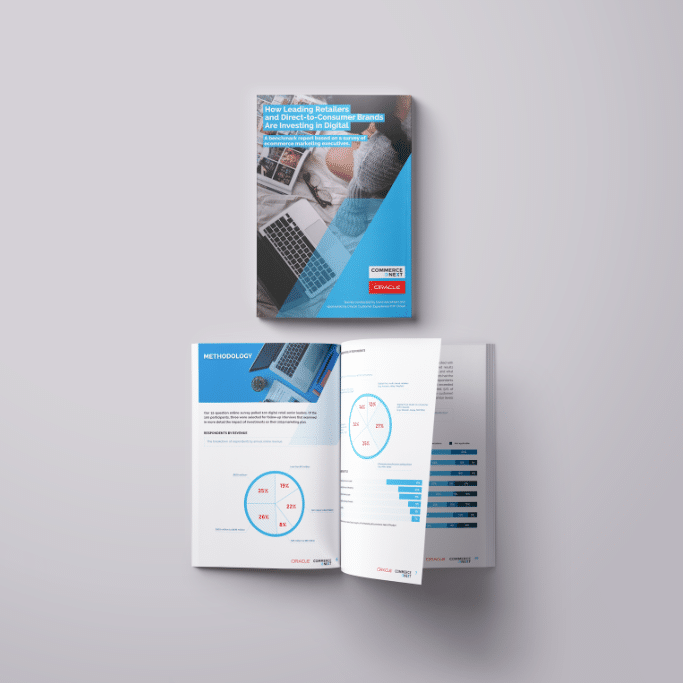
Entertainment & Sports
Chameleon designs and launches CommerceNext's Oracle-sponsored eCommerce benchmarking study, earning coverage in 25+ media outlets.
LEARN MORE
Adam Towvim
CMO | Healthcare Interim

Erika Arevalo
Sr. Growth Marketer - B2B

Carrie McCament
Brand Strategy & Growth Lead

Chris Baccus
Digital Marketing B2C

Miles Williams
CMO: Account Based Marketing

Valter Klug
Fractional CMO - Strategic Marketing Leader

JP Ward
Paid Media Manager

John Schneider
Healthcare Marketing Technology Strategist
Cesar Santos
Creative Director - B2B

Pamela Alegria
Web Design